
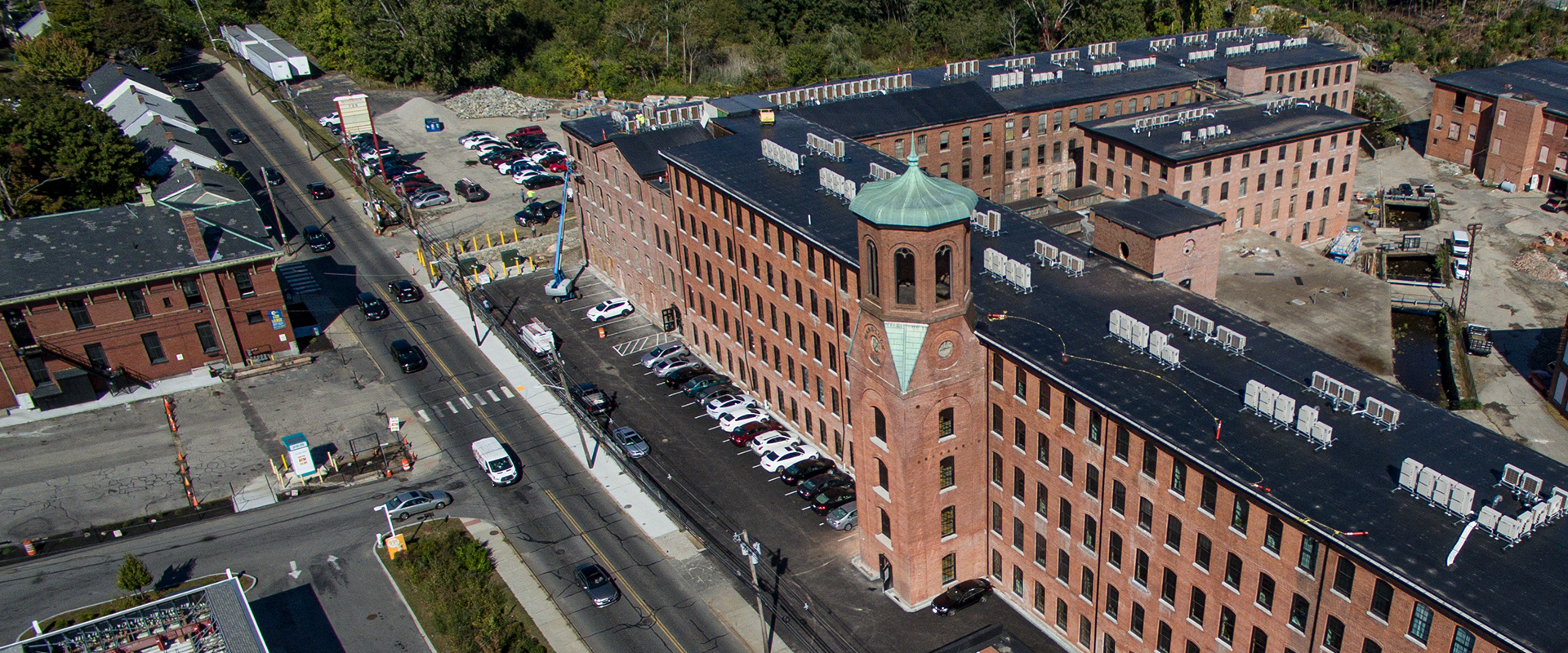
A personal connection, a difficult capital stack and a restoration that went back to the brick, roof and floor elevation of Wanskuck Mill.
A building known before it was owned
David Corsetti knew Wanskuck long before he imagined becoming its developer. The first gym he remembers attending was inside the mill. Years later, after working on other mill restorations, he returned with a different understanding of what the building could become.
Corsetti describes the purchase taking place around the end of 2017 and the beginning of 2018, with financing completed in 2019. The timing meant that a project planned before COVID-19 moved into construction in a very different market.
A difficult capital stack
Historic tax credits were an important part of making the restoration possible. At the same time, construction costs changed sharply after the original budget was prepared. The work had to remain faithful to the building while responding to conditions no one had anticipated when the project began.
Restoring the structure, not just the surface
The intervention reached the fundamental parts of the mill. Brickwork was repointed and sealed. The roof was rebuilt from the substrate. The first floor was raised by approximately two feet to address its relationship to the water table. Later additions that had enclosed parts of the complex were removed or opened so that natural light could return to the building.
These are not the most decorative decisions in a restoration, but they are the ones that determine whether a historic building can perform as a place to live and work for years to come.
What the building feels like now
The clearest measure of the work is the life that followed it. In the project film, Wanskuck resident Joe Clark describes moving into the mill and falling in love with it. That response connects the scale of the restoration to the daily experience of the people now using the building.
Recognition
Wanskuck Mill received a 2024 Rhody Award for historic preservation. The recognition belongs to a project that treated the existing structure as the starting point: preserving the material character of the mill while making it useful again.