
Providence · Held
Wanskuck Mill
Providence, Rhode Island. Held since acquisition.
Four hundred feet of brick, and the first electric light in Rhode Island.
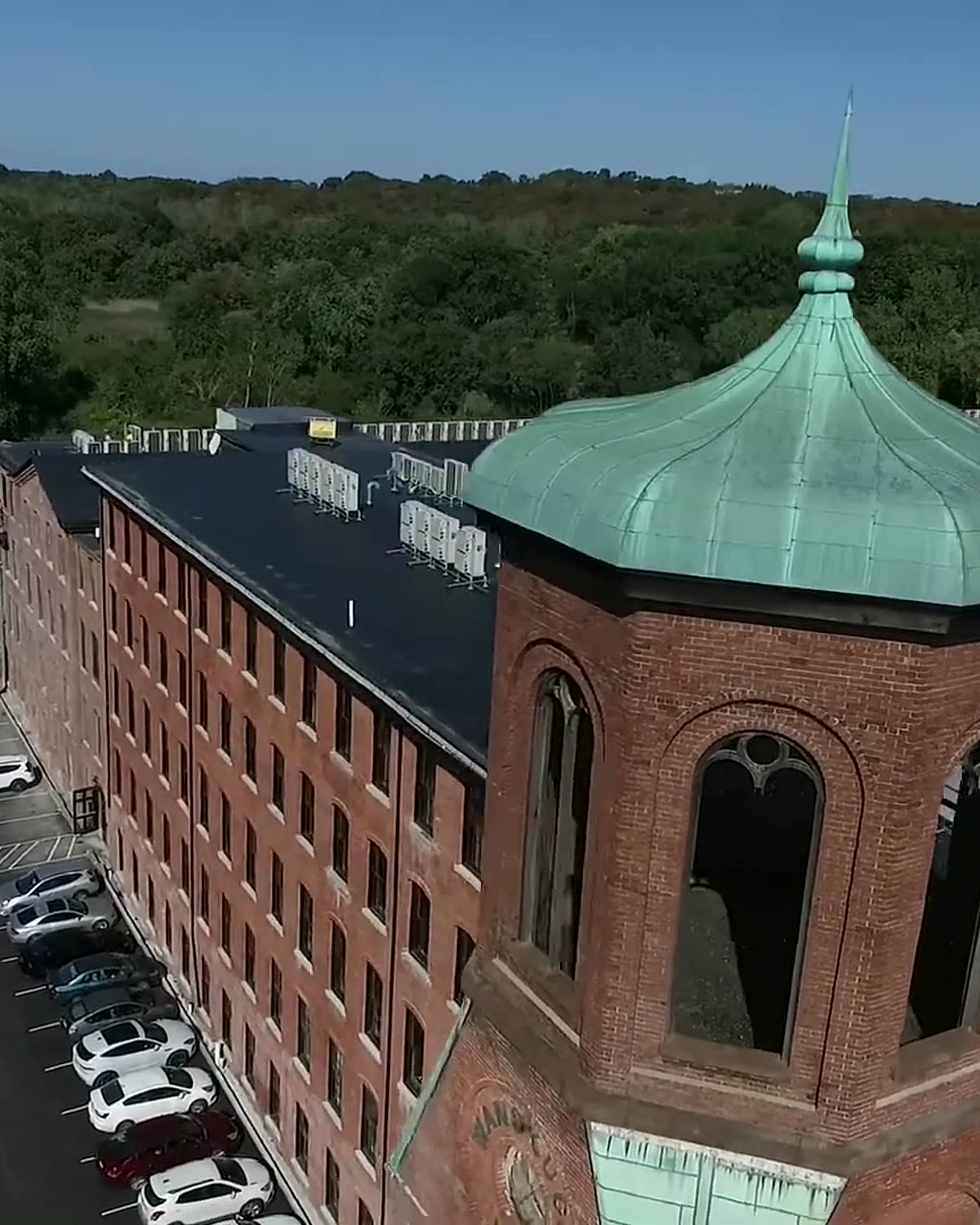
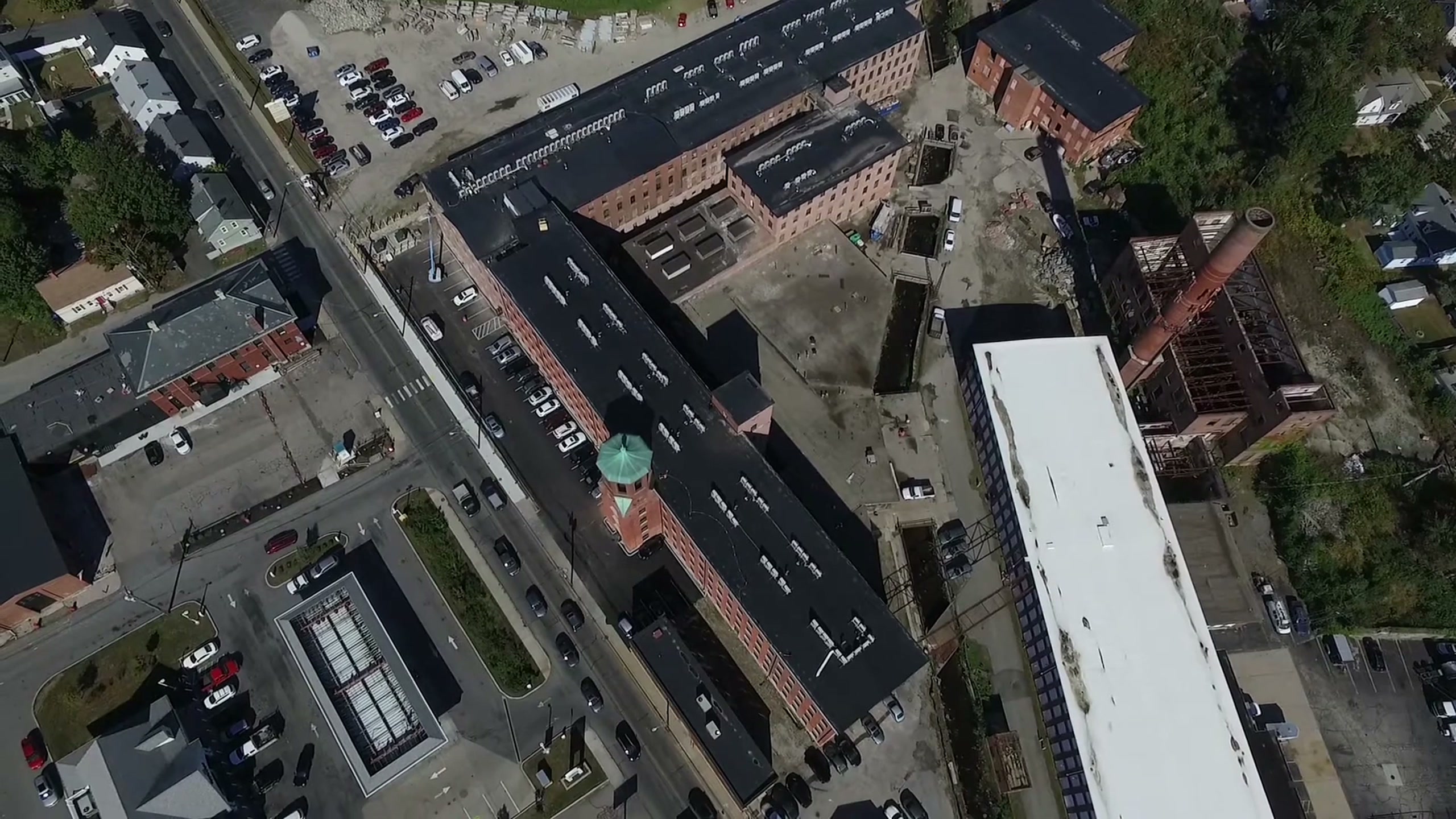
The Wanskuck Company was founded in 1862 by Jesse Metcalf, Henry J. Steere and Stephen J. Olney to spin wool for a country at war. The mill they raised runs four hundred feet along Branch Avenue, five storeys under a copper-domed tower, at what was then the northernmost edge of Providence. It is the only intact mill village of its kind left in the city, and we hold all of it — mill, office, hall and yard.
Built for a war, then for worsted.
Cotton had grown scarce in the North by 1862 and the Union armies needed wool. The company was in operation within two years and successful immediately — first on military demand, then on civilian. By 1869 it was among the first firms in the United States to attempt worsted production, importing the machinery from England because nobody here had yet built it.
The mill grew with the trade rather than ahead of it. A four-storey extension went up to the west in 1874, a three-storey extension to the east in 1906, and a small Romanesque office was set at the sidewalk in the 1880s. Across the road, at 754 Branch Avenue, the company built Wanskuck Hall for the workers’ meetings and dances. The streets behind — Winchester, Vicksburg, Shiloh — were laid out between 1862 and 1864 and named, with some awkwardness in hindsight, after Civil War battles.
The building
Address
—
725 Branch Avenue, Providence, RI 02904
Built
—
1862–64 · extended west 1874 · extended east 1906
Use
—
250 homes and three commercial units
Area
—
345,909 sq ft across five structures
Listing
—
National Register of Historic Places
Strategy
—
Buy & hold — our own office is on the first floor
Status
—
Held
A restored bay
What the building asked of us.
The company that raised this mill spent some twenty thousand dollars in 1883 running electric light through it — the first mill in Rhode Island to have it, twelve years before a telephone reached the office. That is the standard the building set before we got anywhere near it, and it decided most of what we were then allowed to do.
The tower came first. A square shaft that turns through copper-flashed triangular panels into an open octagonal belfry, capped by an ogee dome and a finial, is not a thing anyone would pay to build today and not a thing you repair cheaply. We restored it rather than capped it. Behind the main block, the circular brick gasometer — raised with the mill to make and store its own gas, and one of very few left standing anywhere — was stabilised and left exactly where it stands.
Neither decision returns a dollar. Both are the reason the building is worth what it is now, and neither would have survived an owner who intended to sell.
It outlasted the industry it was built for, the family that owned it, and the century that needed it.Wanskuck Mill No. 1 · in operation 1864
The loft kitchen
I never called my home a house. I always called it a home.A resident · Wanskuck Mill
Sixty years in pieces, put back as one building.
The mill closed in 1957 and spent sixty years divided — leased out, subdivided, half-occupied, the pond along its north flank drained to marsh and never put back. Premier acquired the complex and made it one building again: five structures, 345,909 square feet, 250 homes and three commercial units, financed in part with federal historic tax credits, which have the useful property of requiring a restoration to be verifiable rather than decorative.
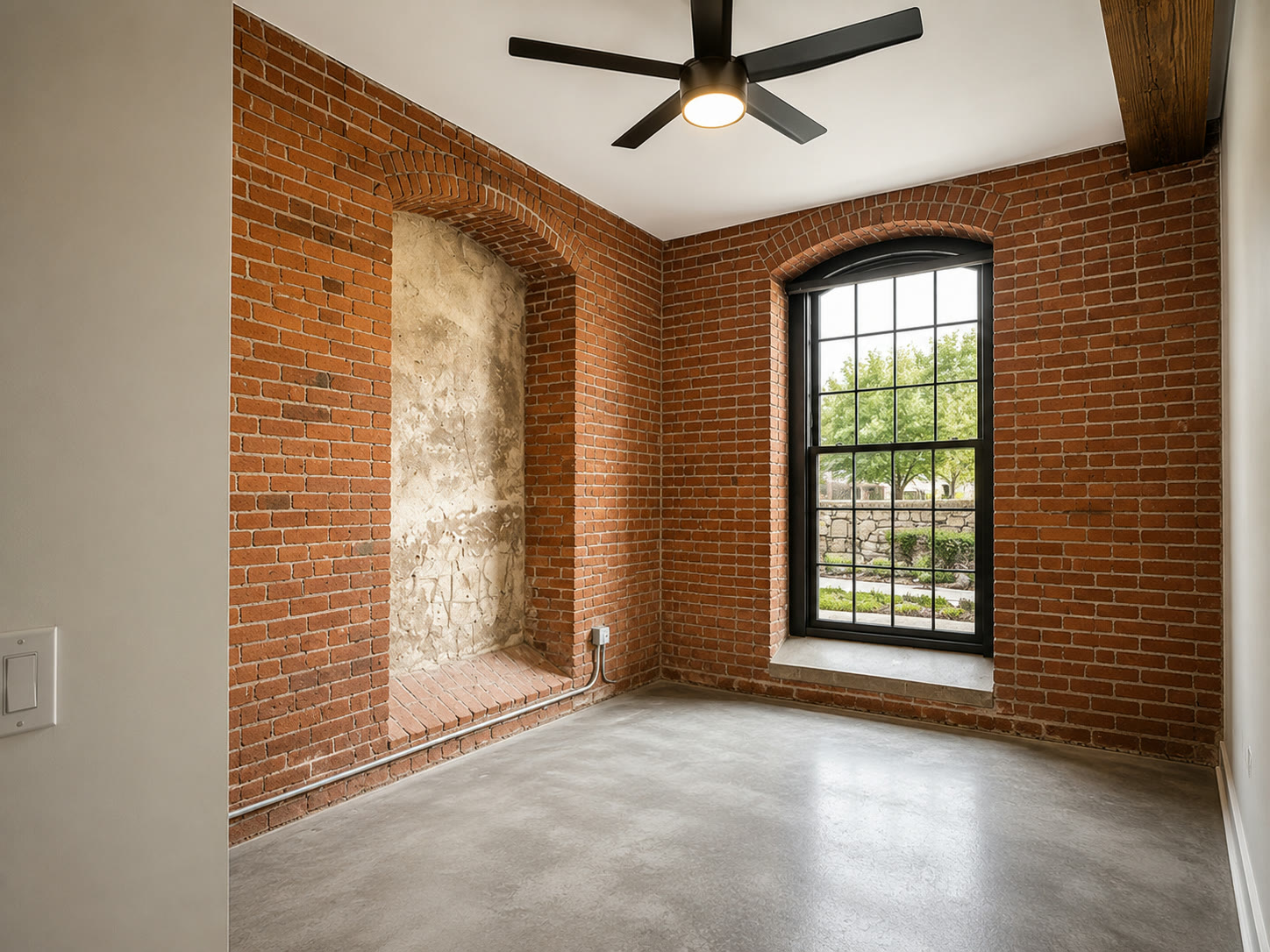
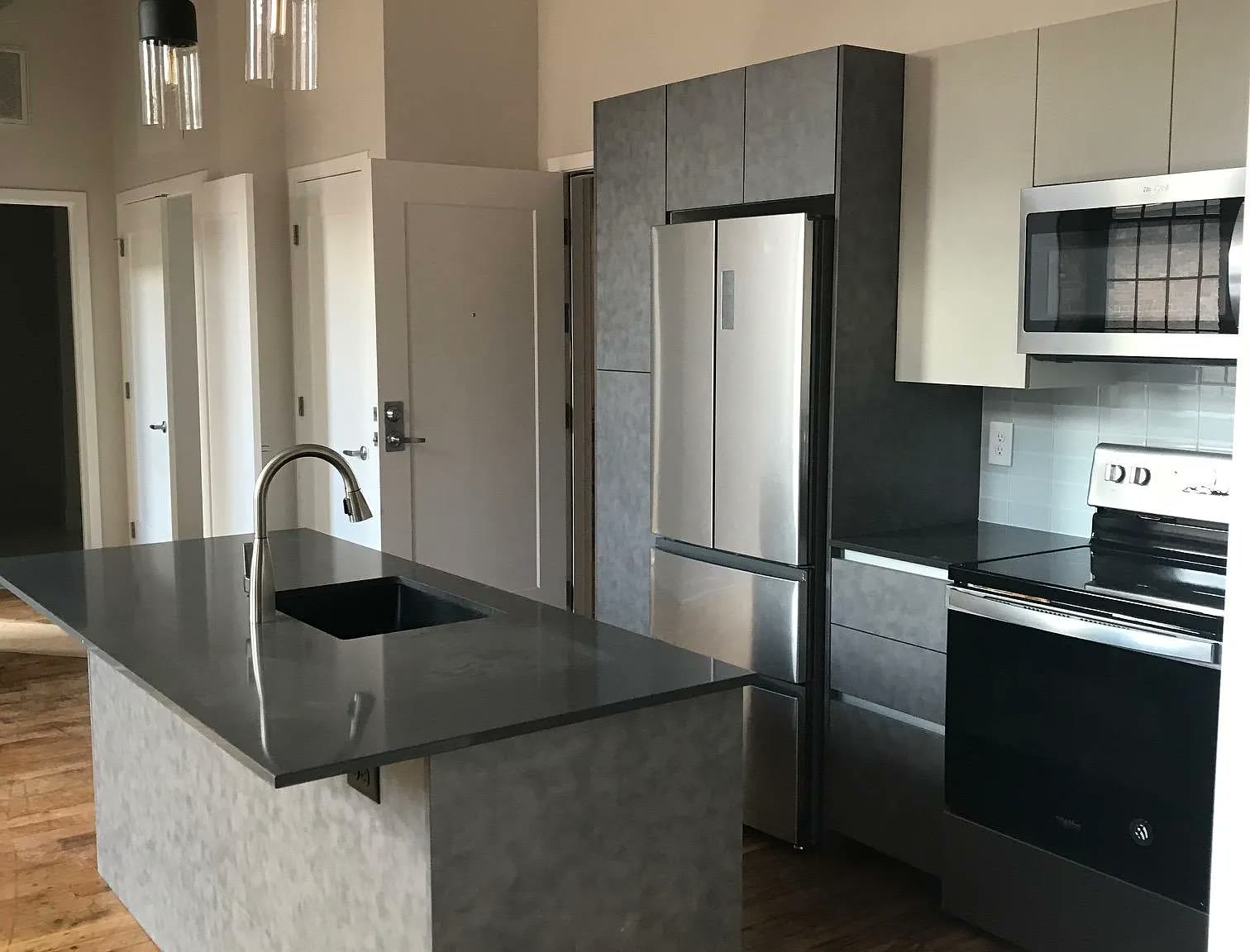
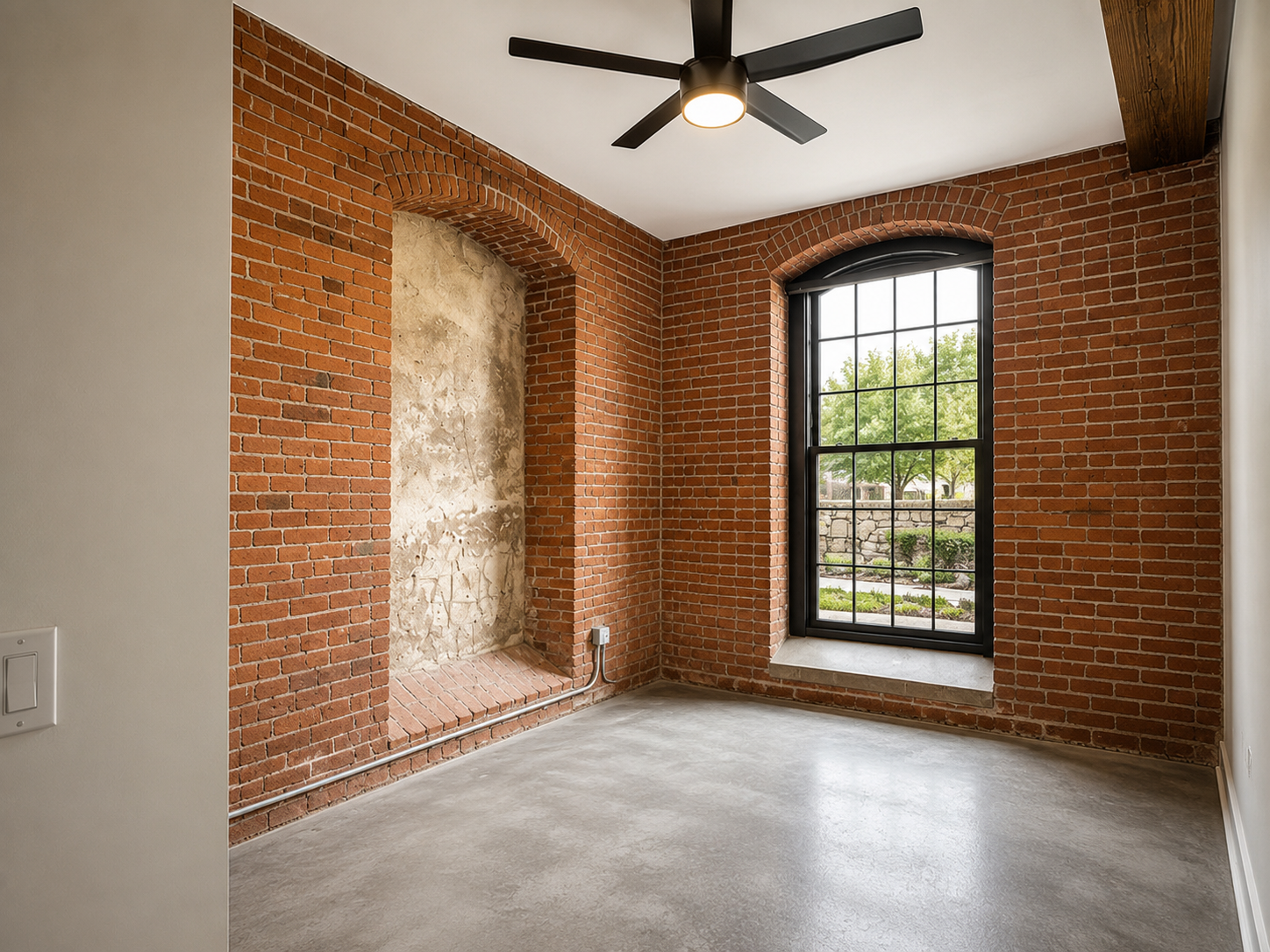
New windows were made to the original openings, every one of them. The single-storey bump-out added along Branch Avenue was taken off. The smaller brick buildings standing in front of the mill were cleaned, reinforced and kept rather than cleared. Inside, plans run from studios to two bedrooms, with Italian cabinetry, laundry in every apartment, and a two-thousand square foot exercise studio in what had been mill floor.
The interstate is four minutes away at the Branch Avenue ramps, downtown Providence eight. Our own office is on the first floor — which is the part we would point at first. We did not restore this building and then leave it.