
Central Falls · Held
Roosevelt Mill
Central Falls, Rhode Island. Held on the Blackstone River.
A cotton mill on the river, given back its light and let out as homes.
Roosevelt Mills stands on the Blackstone River in Central Falls — the most densely settled square mile in New England, and the river that ran the first successful cotton spinning in America a few miles upstream. The mill was built to draw power and light from the water. We kept the light and let the power go, and turned the floors into a hundred and twenty apartments that face the river the building was set against.
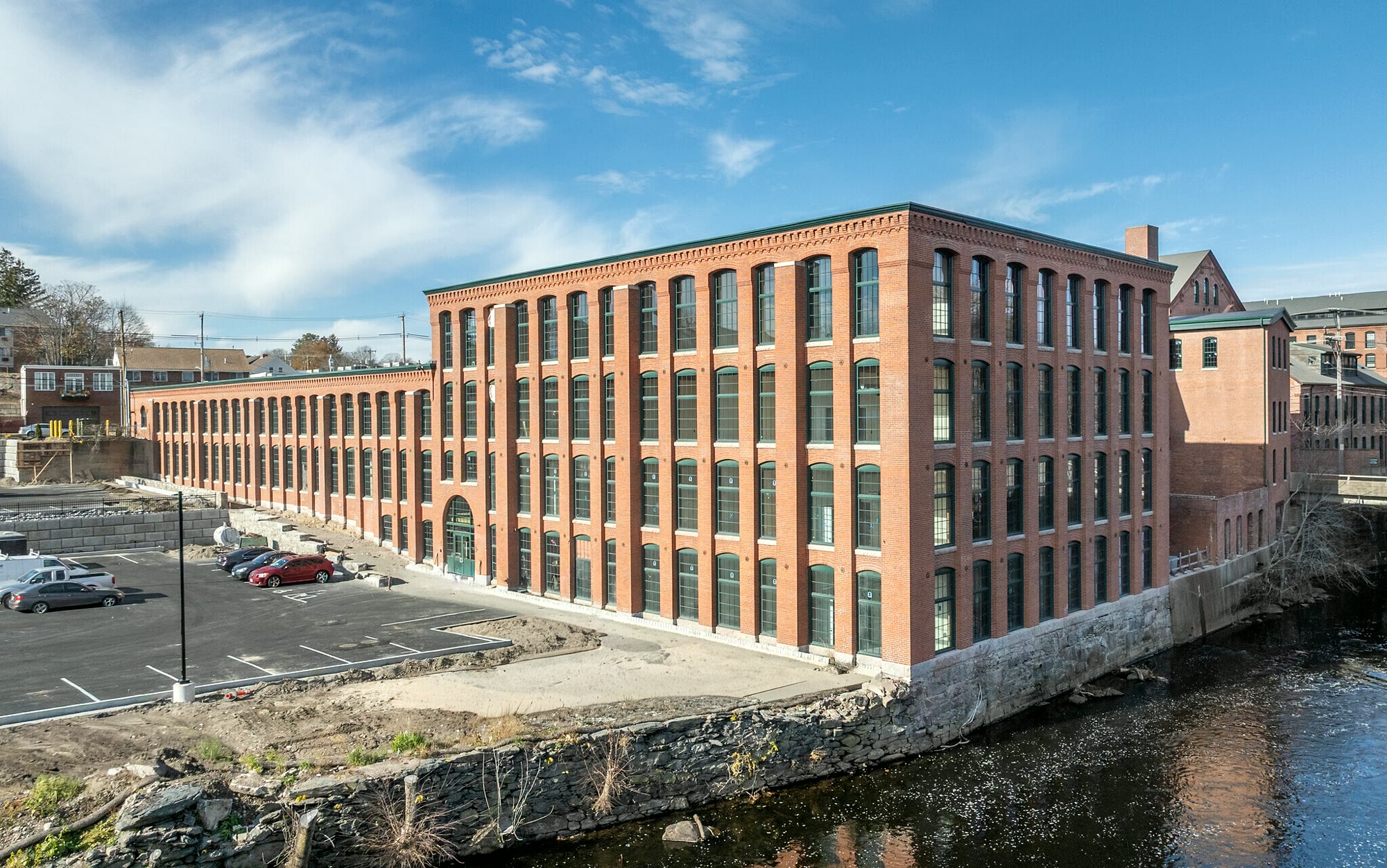
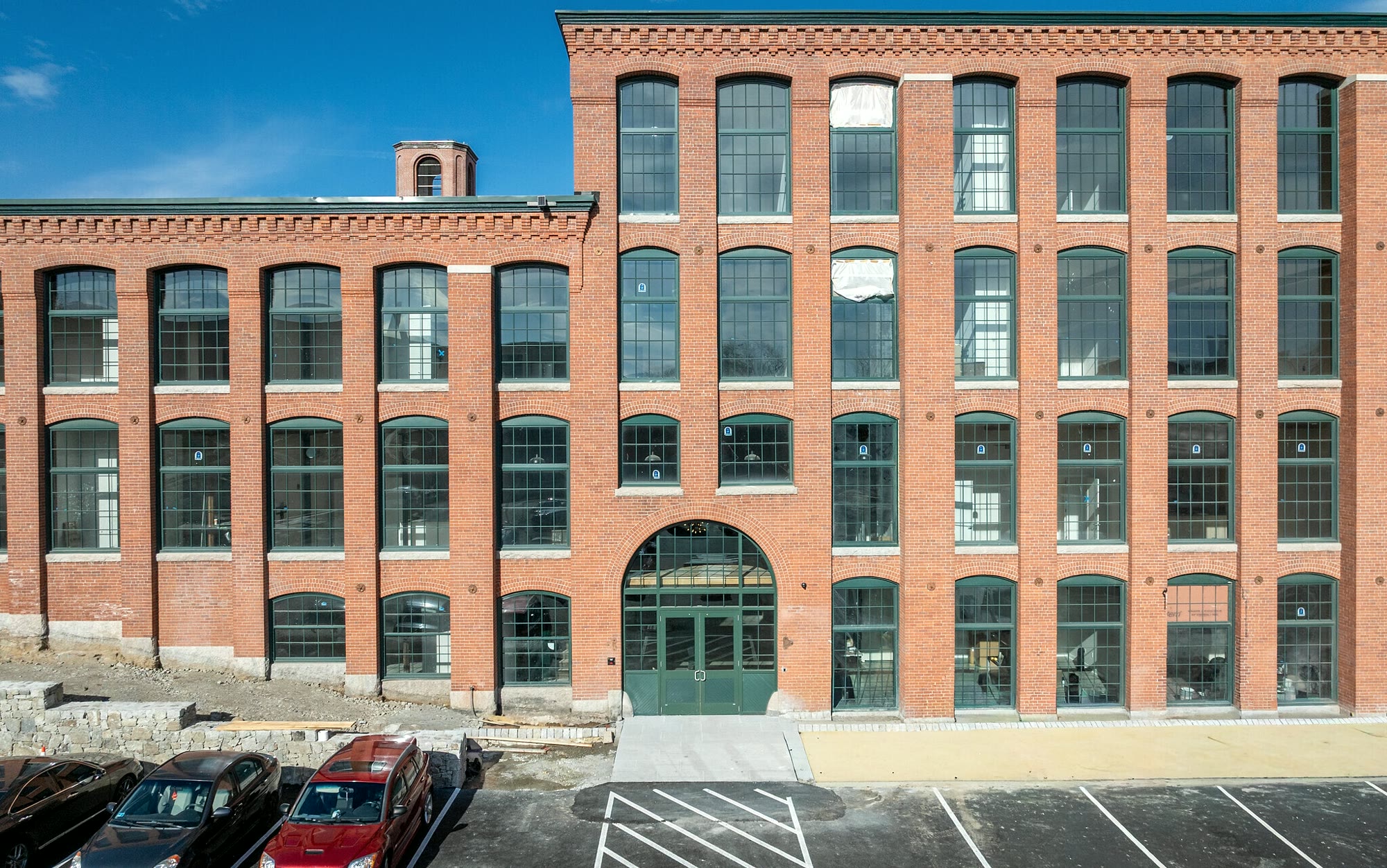
The river decided where the windows went.
A spinning mill lived and died on two things: water to turn the machinery, and daylight to see the thread. Roosevelt Mills was laid out for both — a long masonry block set parallel to the Blackstone, with tall segmental-arched windows down the south face so the light came off the water and reached deep into the floor.
That orientation is worth more as housing than it ever was as industry. The south-facing apartments look straight out over the river, hold their light from morning to late afternoon, and sit above one of the few stretches of the Blackstone that has been given back to walkers rather than turbines. We did not design any of that. We inherited it, and were careful not to undo it.
The building belongs to the Central Falls Mill Historic District, a run of masonry mills raised between 1825 and the early 1900s beside a stone dam that once channelled the Blackstone beneath their floors to turn the machinery. The cooperative power canal was filled in 1965; the National Register listed the district in 1976 and enlarged it in 2018. What the water left behind is the part worth keeping — the orientation, the light, and walls built to a standard no one would pay for now.
The building
Address
—
Roosevelt Avenue, Central Falls, RI
District
—
Central Falls Mill Historic District, on the Blackstone
Built
—
A milling district raised 1825 – c.1910
Setting
—
South-facing units on the Blackstone River
Use
—
120 homes — studio, one and two-bedroom
Plans
—
From 563 sq ft studios to 819 sq ft one-beds
Amenities
—
Restored lobby, in-unit laundry, on-site parking
Listing
—
National Register — listed 1976, expanded 2018
Strategy
—
Buy & hold
Status
—
Held
The Blackstone, at Roosevelt Mills
The bones left where you can see them.
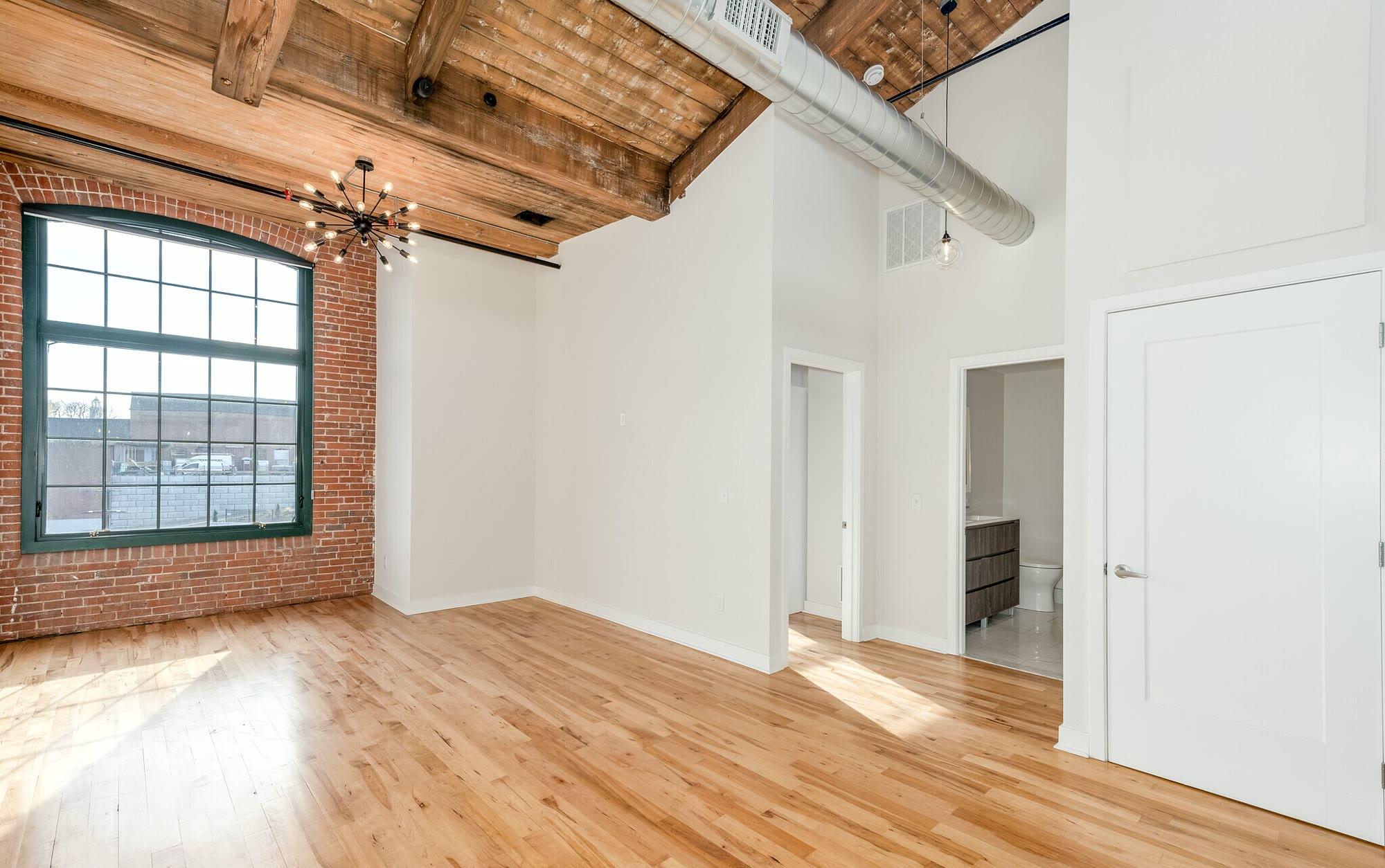
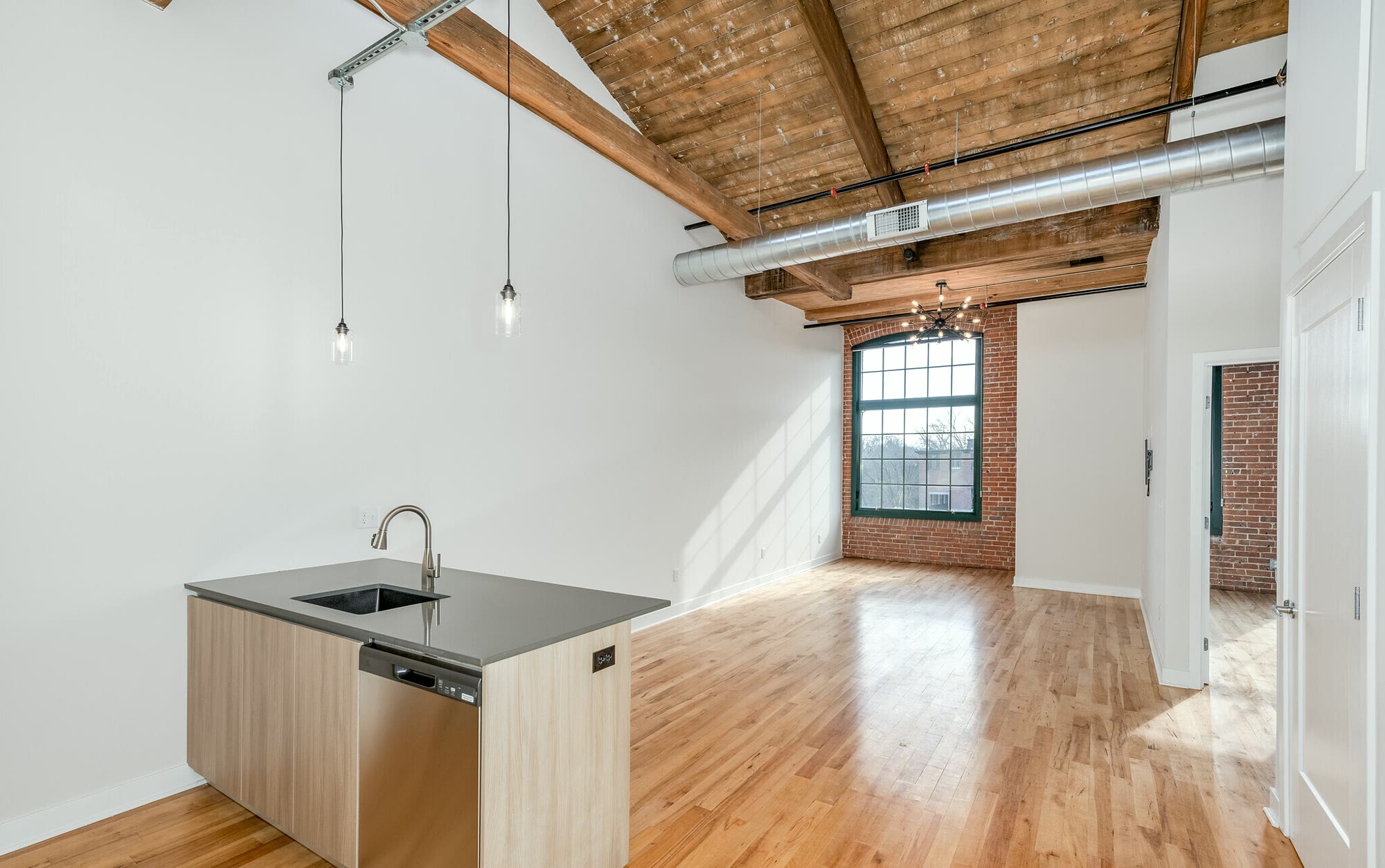
The easy conversion drops a flat ceiling under the timber and runs the services inside it. It is faster and it erases the reason anyone wants to live in a mill. We ran the services along the beams and left them in view, cleaned and repointed the brick rather than boarding it, and kept the heavy timber overhead in every plan.
The common parts got the same treatment. The lobby and the long ground-floor corridor keep their exposed brick and arched openings — restored, lit, and left legible as the mill they were. A resident walks in through the building’s own history, not a drywall version of it.
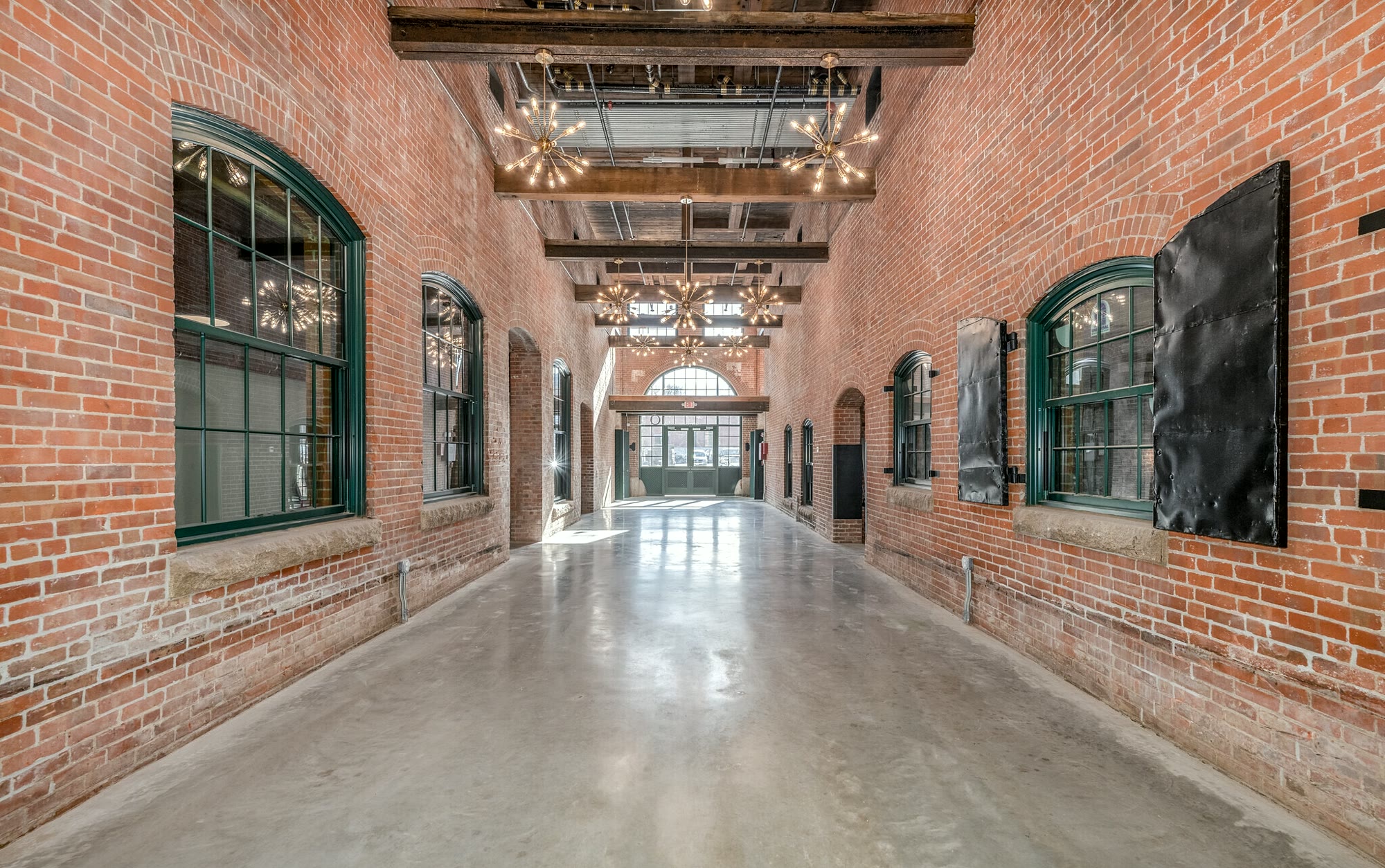
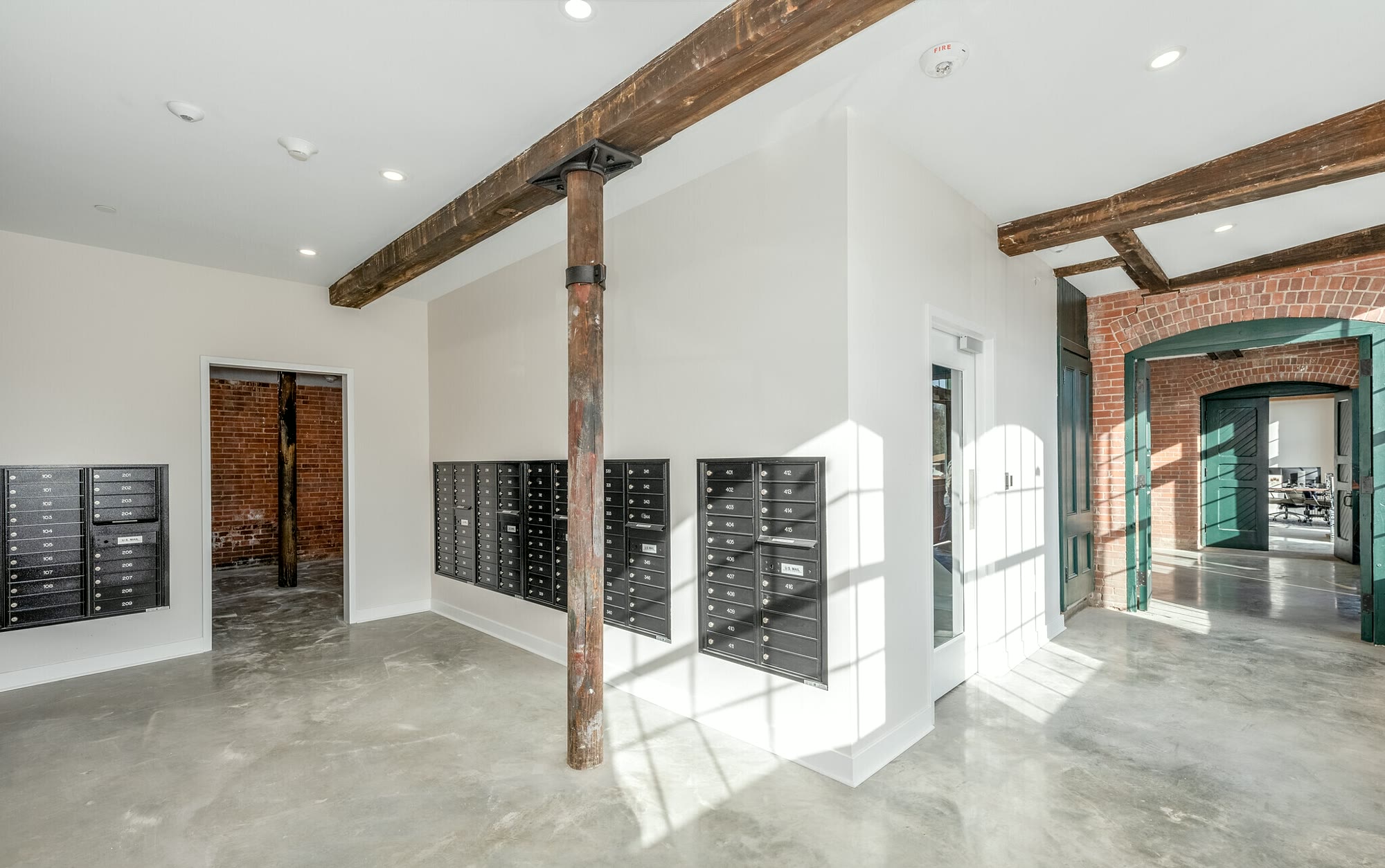
The best-lit room in the building was built for a machine. Now someone lives in it.Roosevelt Mills · Central Falls
A room built for the light
Studios to two-beds, all under the same timber.
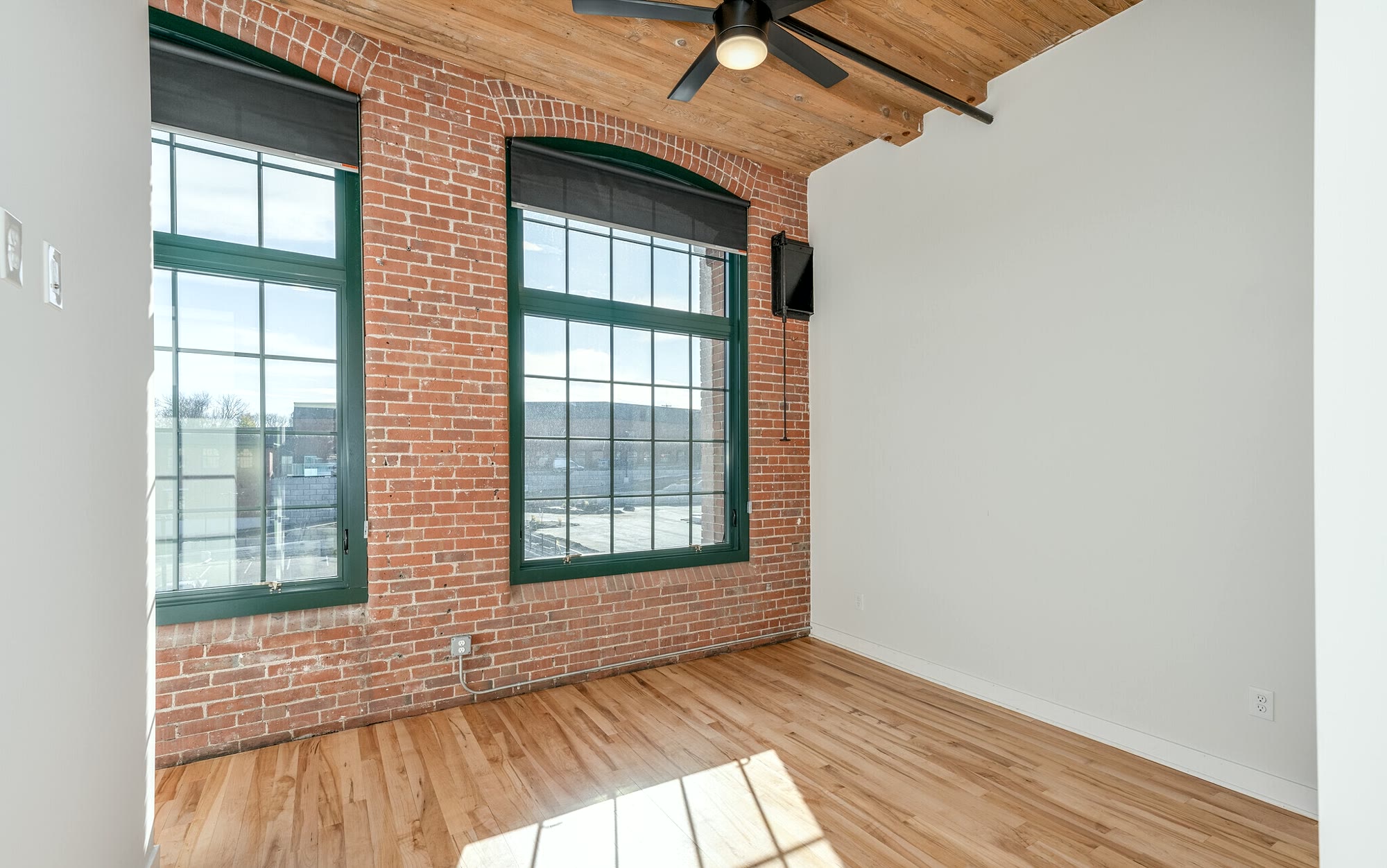
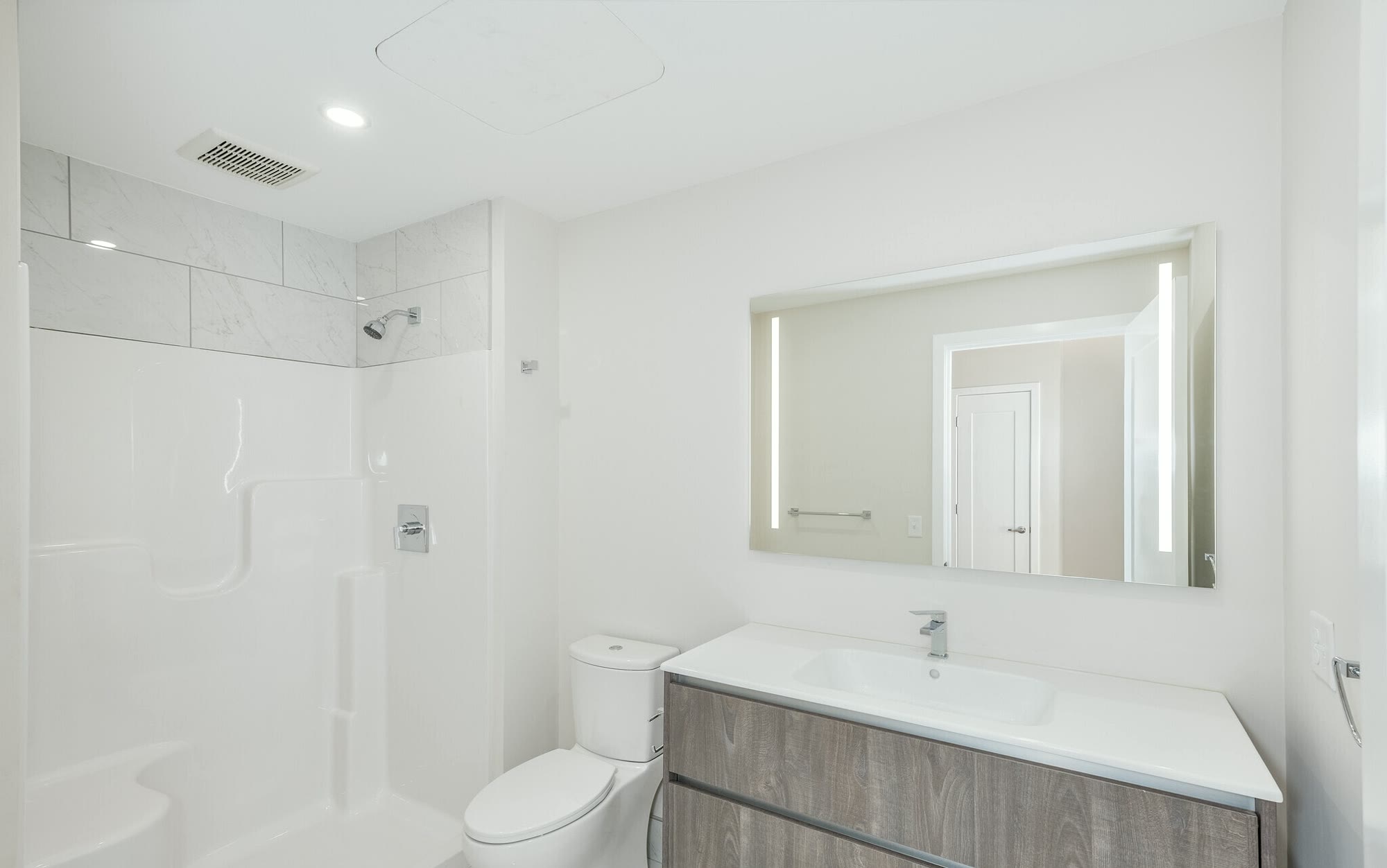
Plans run from 563 square foot studios to 819 square foot one-bedrooms and larger two-bedroom corners, each with a full kitchen, in-unit laundry and at least one wall of the original fabric left exposed. The finishes are contemporary — flat cabinetry, stone counters, tiled baths — set deliberately against brick and timber that are a hundred and sixty years older.
A hundred and twenty homes, held and managed by the firm that restored them. Central Falls sits minutes from Pawtucket and twenty from downtown Providence, on a river that is finally worth living beside again.